HVAC After-Hours Answering Service: How to Stop Losing No-Heat Calls
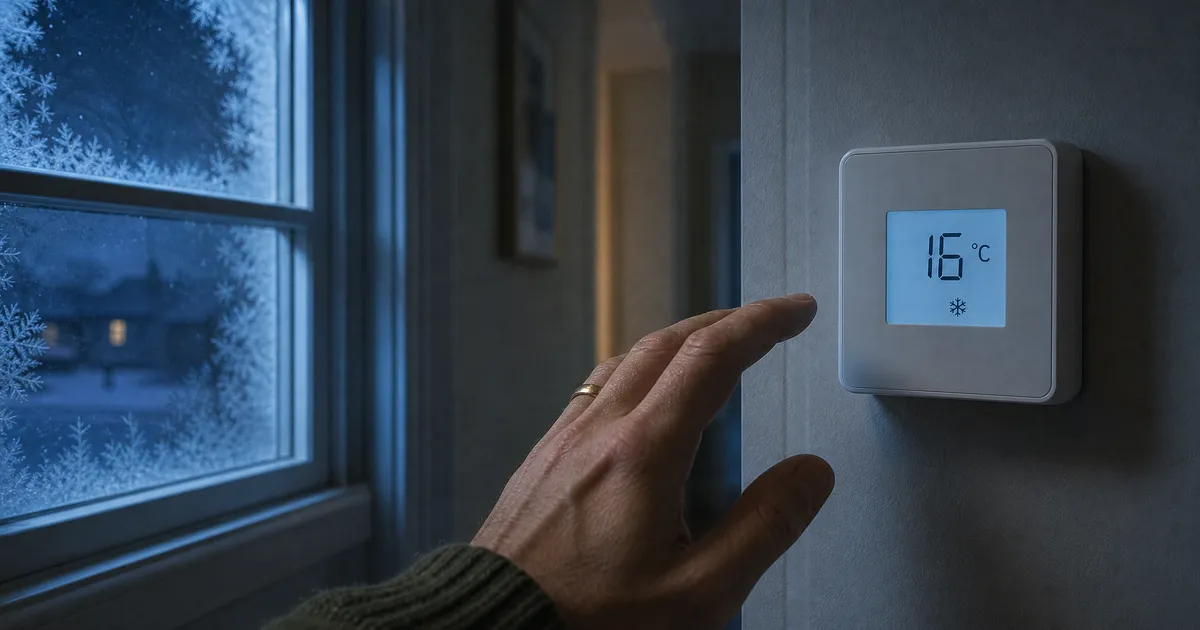
When a furnace quits at 9 PM in November, the homeowner calls until someone answers. If your phone goes to voicemail, they don't wait for your callback. They call the next company and book them. An after-hours answering plan, whether that's an on-call tech, an answering service or an AI receptionist, makes sure your company is the one that picks up.
This post covers why these calls slip away, what they cost you, what you can fix this week on your own, and how an automated system handles the night shift.
"We're slammed all day, and the phone keeps ringing after we close"
Every HVAC owner knows the pattern. The first cold nights of the season. Sunday evening, when people get home and the house is cold. The week the clocks go back (this year, Sunday, November 1), when it's dark by five and everyone is home.
Your techs are finishing their last call. The office has closed. And the phone keeps ringing.
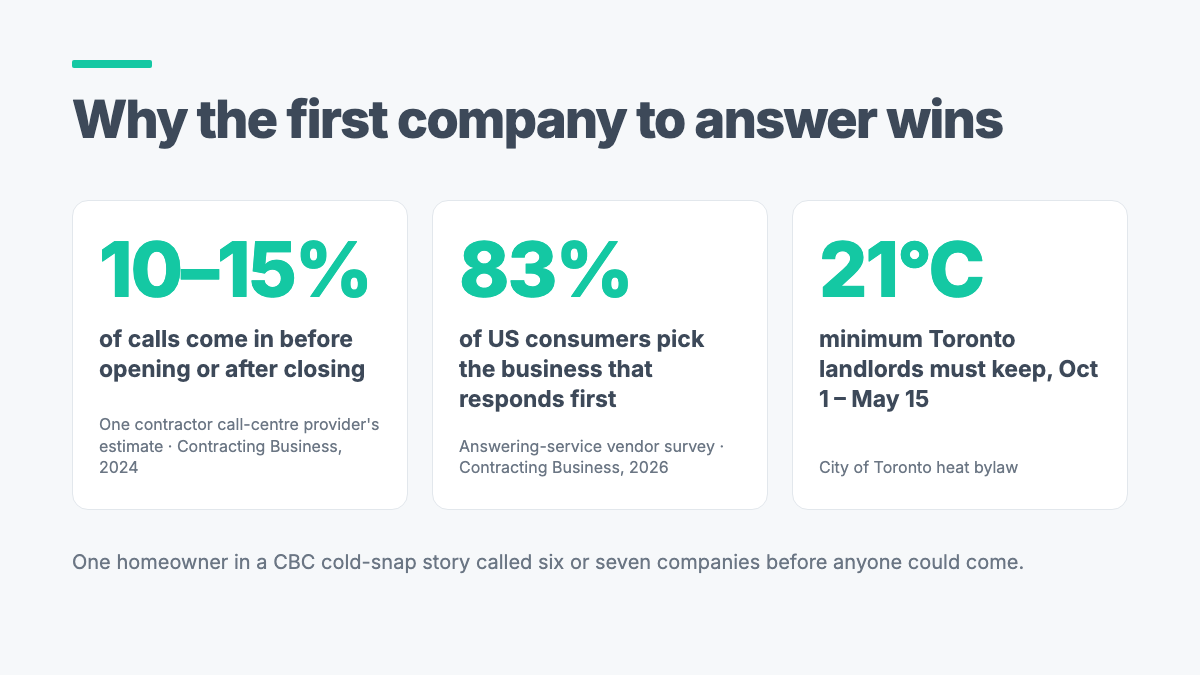
It isn't just your area. During a cold snap in Alberta, CBC reported heating crews working almost around the clock and booking new customers several days out. One homeowner in that story called six or seven HVAC companies before finding anyone who could come.
That's the real problem. A no-heat call isn't a lead you can nurture. It's a cold, worried person working down a list.
What it costs you
You probably don't know exactly how many calls you miss after hours. Most owners don't. So start with these questions:
How many calls came in after 5 PM last November?
How many of those callers left a voicemail?
How many did you reach the next morning, and how many had already booked someone else?
A few outside signals point the same way:
One contractor call-centre provider estimates that 10–15% of calls come in before opening or after closing, and recommends tracking abandoned, voicemail and hang-up calls. (That's her estimate from her own work, not a study.)
In a 2026 survey by an answering-service company, 83% of US consumers said they choose the business that responds first. It's a vendor survey of American consumers, so treat it as a direction, not a precise number.
An older Harvard Business Review study of online sales leads found companies that responded within an hour were nearly seven times as likely to qualify the lead as those that waited even one more hour. That was online leads, not phone calls. A no-heat call is more urgent, not less.
Then do your own math. Think about what an average repair call is worth to you, and what it's worth when that repair turns into a replacement or a maintenance customer for years. Now multiply by the calls you think went to voicemail last winter.
There's a Toronto angle too. Under the city's rules, landlords who supply heat must keep units at a minimum of 21°C from October 1 to May 15. When a property manager calls you about no heat, they're under real pressure to get it fixed. The company that answers is the company they remember.
What you can do this week, even without new software
You don't need to buy anything to start. Here's a simple after-hours plan.
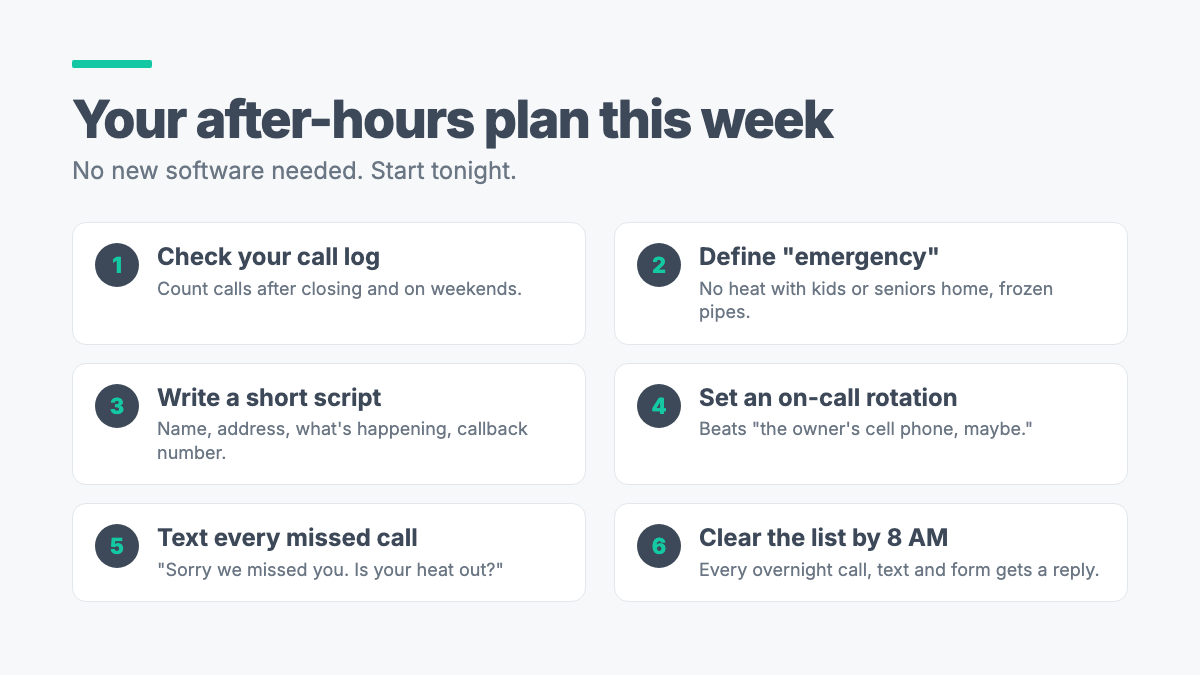
1. Look at your call log. Pull last month's calls and sort by time. Count the ones after closing and on weekends, and how many went unanswered. This takes 20 minutes and tells you how big the problem is.
2. Decide what counts as an emergency. No heat with young kids or seniors at home? Frozen pipes risk? A carbon monoxide alarm? (That one isn't a booking. The caller should leave the house and call 911 or their gas utility right away. Your script should say so.) Write the list down so everyone handles it the same way.
3. Write a short after-hours script. Whoever or whatever answers should ask the same few questions: name, address, what's happening, is anyone vulnerable at home, best callback number. Then say clearly what happens next.
4. Set an on-call rotation. Even a simple weekly rotation beats "the owner's cell phone, maybe."
5. Text every missed call. If a call goes unanswered, send a quick text: "Sorry we missed you. Is your heat out? Reply here and we'll get you booked." Many people will text back when they won't leave a voicemail.
6. Work the overnight list first thing. Every call, text and form from overnight gets a reply before 8 AM.
A quick Canadian note on texting: Canada's anti-spam law (CASL) covers text messages as well as email. Replying to someone who just called you about service is a reply to their inquiry. If you plan to keep sending them marketing messages, you need consent. Implied consent from an inquiry lasts six months, and every message needs your business name and an easy way to opt out.
How an automated system handles the night shift
Doing all of this by hand works until you're busy, which is exactly when the calls come. That's where a system helps.
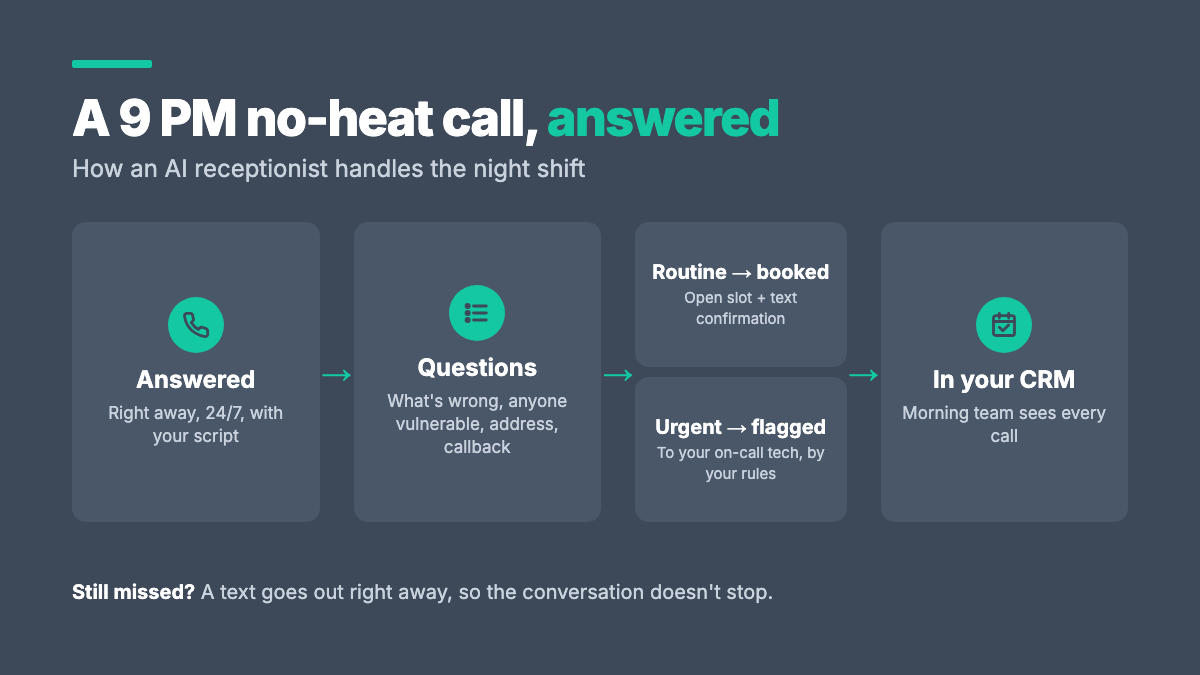
Here's what an AI receptionist can do for an HVAC company after hours:
Answer every call, 24/7, in a natural voice, using your script.
Ask your questions (what's happening, is anyone vulnerable, address, callback number) and record the answers.
Sort routine from urgent. A tune-up request gets booked into an open slot. A true emergency gets flagged to your on-call tech right away, following the rules you set.
Book into your calendar, and send the homeowner a text confirmation.
Hand everything to your CRM, so the morning team sees every overnight call in one place.
If a call is still missed, the Lead Rescue System sends a text right away and follows up so the conversation doesn't stop.
You stay in control: you decide the script, the emergency rules and who gets woken up. The system simply makes sure the phone gets answered. See how this works for HVAC companies.
FAQ
Do I need a 24/7 answering service for my HVAC company?
If you take emergency calls, or want to, someone needs to answer them. That can be an on-call tech, a human answering service or an AI receptionist. The worst option is voicemail, because a cold homeowner usually calls the next company instead of waiting.
What should an after-hours HVAC script say?
Keep it short: greet the caller with your company name, get their name, address and callback number, ask what's happening and whether anyone vulnerable is at home, and tell them clearly what happens next. For a carbon monoxide alarm, tell them to leave the house and call 911 or their gas utility.
Can an AI receptionist handle emergency calls?
It can answer, ask your questions, and flag urgent calls to your on-call tech based on the rules you set. It shouldn't replace safety instructions or your judgment on true emergencies. It makes sure those calls reach a person quickly instead of sitting in voicemail.
How much does a missed after-hours call cost?
It depends on your average job value and how many of those callers become long-term customers. Start by counting last month's after-hours and missed calls in your call log, then multiply by your average repair value.
Want to know how many calls you're missing after hours? → Book a Free Growth Audit
